Skip to content

 WhatsApp
 Call Back

Ihram is the sacred state a Muslim enters before performing Hajj or Umrah. It is more than the clothing worn by pilgrims. It is a state of worship that begins with the intention to perform Umrah or Hajj and comes with specific rules that must be followed. A pilgrim enters Ihram before crossing the Miqat and remains in this state until the required stage of the pilgrimage is completed.
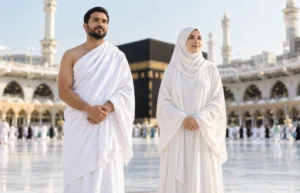
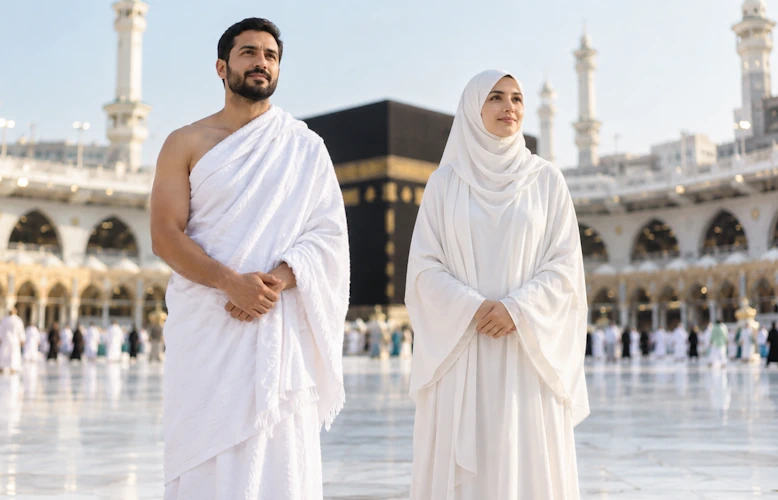
For men, Ihram clothing consists of two plain pieces of cloth. Whereas for women, they wear their normal modest Islamic clothing. The purpose of Ihram is to leave behind worldly differences and focus on worship and obedience to Allah.
What is the importance of Ihram?
Ihram marks the beginning of the sacred rituals of Hajj or Umrah. Once a pilgrim enters this state, some of the normally permissible actions become restricted. These rules help pilgrims maintain a simple and respectful state during their worship.
Ihram also represents equality among Muslims. Pilgrims come from different countries and backgrounds. They leave behind signs of status or wealth and focus on the same act of worship. Ihram reminds pilgrims to remain humble and focused on Allah.
When to enter into Ihram?
A pilgrim must enter the state of Ihram before crossing the Miqat. The exact point depends on the route and where the pilgrim is traveling from. Someone flying toward Jeddah for Umrah should prepare for Ihram before reaching the Miqat while traveling by air.
Pilgrims traveling from Madinah toward Makkah can enter Ihram before reaching the Miqat. They may wear the Ihram at their hotel or before starting the journey. The intention is then made before crossing the Miqat.
It is helpful to prepare early when traveling by plane. Men can wear their Ihram at home or at the airport. However, the intention to enter the state of Ihram should be made before crossing the Miqat.
Al-Bukhari states that Prophet Mohammed (PBUH) said:
“One shouldn’t pass the Miqat unless he/she is in the state of Ihram.” (Al-Bukhari)
How to wear Ihram for men, women, and children?
Before wearing Ihram, pilgrims should take care of personal cleanliness. Ghusl is recommended before entering Ihram. It is also recommended to complete normal grooming before entering the state of Ihram.
Ihram for men
Men wear two unstitched pieces of white cloth. The lower piece is called the Izar and covers the lower part of the body. The upper piece is called the Rida and covers the upper body. Men should not wear normal fitted or tailored clothing while in Ihram.
Men should also avoid covering the head with a fitted cap, hat or similar head covering when in Ihram. Suitable sandals can be worn according to the rules of Ihram.

Ihram for women or ladies
Women do not have a special two piece Ihram uniform like men. They can wear normal modest Islamic clothing that provides proper coverage. The clothing does not have to be white. Although a woman in Ihram should not wear a niqab, she may cover her face with a loose cloth that hangs over it without touching the face according to the guidance.
Women should also avoid perfume and other prohibited actions once they enter the state of Ihram. A woman who is menstruating can enter Ihram and make the intention. However, she does not perform Tawaf until she is able to do so.

Ihram for children
Children can also enter Ihram when accompanying their families for Hajj or Umrah. A guardian helps the child prepare and make the intention according to the child’s age and ability. The guardian should also help the child follow the rules of Ihram.
The exact requirements for children can vary based on age and scholarly guidance. Parents should ask a qualified scholar or their travel guide if they are unsure about the rules for a young child.
Salah Al-Ihram
Salah al-Ihram refers to two voluntary rak’ahs (nafl) that some scholars recommend before entering Ihram. Whereas others do not consider a special two-rak’ah prayer for Ihram to be established. If a pilgrim performs a voluntary prayer at that time, they may then make the intention for Hajj or Umrah.
When a pilgrim chooses to perform these two rak’ahs, they are performed before entering the state of Ihram and before crossing the Miqat.
What actions are forbidden in Ihram?
After entering Ihram, pilgrims must avoid certain actions. These restrictions apply to men and also women in different ways. Common prohibitions includes:
- Cutting hair or nails
- Using perfume or scented products
- Hunting or killing land animals
- Engaging in sexual activity
- Getting married or arranging a marriage contract
- Men covering the head
- Men wearing stitched or fitted clothing
- Women wearing a niqab or gloves
- Arguing fighting or using offensive language
Penalties for violating the rules of Ihram
Violating the rules of Ihram may require different forms of compensation depending on the type and seriousness of the violation, such as Dam (sacrifice), Sadaqah (charity), or fasting as Fidyah.
- Fidyah: Minor Ihram violations such as removing hair or nails or using perfume may require Fidyah. You have a choice, you can either fast for three days, feed six poor people or sacrifice a sheep.
- Animal Sacrifice (Dam): Some violations such as wearing stitched clothes for an extended period of time, hunting or shaving a large area of head require sacrificing an animal. You need to sacrifice a goat or sheep for these violations and it needs to be done within the Haram in Makkah.
- Major Invalidations: Sexual intercourse before completing the main rituals such as Tawaf and more can invalidate the Umrah or Hajj. As this requires a severe penalty and it includes sacrificing a camel or cow.