Skip to content

 WhatsApp
 Call Back
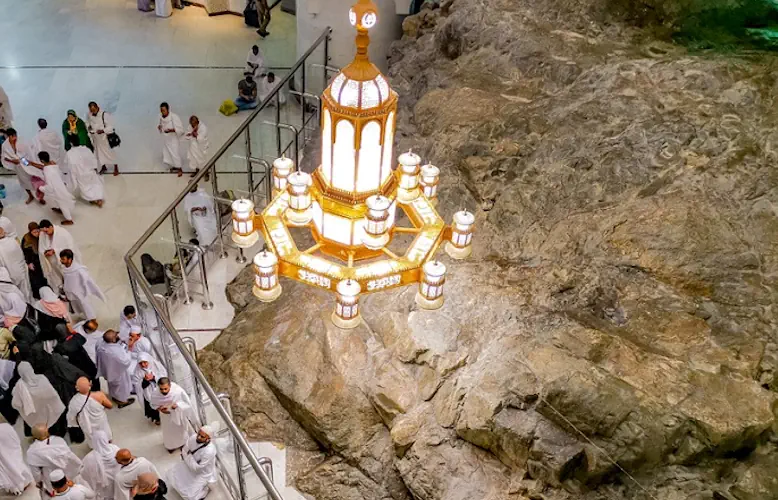

Safa and Marwa are two small hills in Masjid al-Haram in Makkah. They are connected by a covered walkway known as the Mas’a. Muslims perform Sa’i between these two points during Hajj and Umrah. This practice is linked to the story of Hajar (AS) and her search for water for her son Ismail (AS).
Where are Safa and Marwa located?
Safa and Marwa are located inside Masjid al-Haram in Makkah. Safa is closer to the Ka’bah, while Marwa is connected to it through the Mas’a. The distance between the two points is about 450 meters.
Today, the area between Safa and Marwa is part of Masjid al-Haram. Pilgrims perform Sa’i in a covered walkway between the two. The space allows pilgrims to move between both points during the pilgrimage.
History of Safa and Marwa
The history of Safa and Marwa is connected with Prophet Ibrahim (AS), Hajar (AS), and their son Ismail (AS). According to an authentic narration in Sahih al-Bukhari, Ibrahim (AS) left Hajar and the infant Ismail in the valley of Makkah with some water and provisions.
After the water ran out, Ismail (AS) became thirsty. Hajar (AS) began looking for water and help. She went to Safa and looked across the valley. When she could not find anyone, she went toward Marwa. She continued moving between Safa and Marwa seven times.
After reaching Marwa on the seventh journey, Hajar (AS) heard a voice. She then saw Jibril (AS) near the place of Zamzam. Water began to come out from the ground. Hajar (AS) gathered the water and used it for herself and her son.
The Prophet Muhammad (PBUH) explained that this movement between Safa and Marwa became the basis of the practice performed by pilgrims. The story of Hajar (AS) is therefore closely connected with Sa’i.
Why are Safa and Marwa important?
Safa and Marwa are important because Allah has named them among His symbols.
The Quran says:
إِنَّ الصَّفَا وَالْمَرْوَةَ مِن شَعَائِرِ اللَّهِ ۖ فَمَنْ حَجَّ الْبَيْتَ أَوِ اعْتَمَرَ فَلَا جُنَاحَ عَلَيْهِ أَن يَطَّوَّفَ بِهِمَا ۚ وَمَن تَطَوَّعَ خَيْرًا فَإِنَّ اللَّهَ شَاكِرٌ عَلِيمٌ
“Indeed, Safa and Marwa are among the signs of Allah. So whoever makes Hajj to the House or performs Umrah, there is no blame upon him for walking between them. And whoever volunteers is good – indeed, Allah is Appreciative and Knowing.”
(Surah Al-Baqarah 2:158)
The same verse refers to those who perform Hajj or Umrah and walk between Safa and Marwa. A narration from Aisha (RA) also explains the religious status of Sa’i between the two.
Their importance is also connected to the example of Hajar (AS). Her search for water is remembered through this act of worship. For pilgrims, Sa’i is therefore both a part of pilgrimage and a reminder of her patience and effort.
What is Sa’i between Safa and Marwa?
Sa’i is the act of walking between Safa and Marwa during Hajj or Umrah. It consists of seven journeys between the two points. The first journey starts at Safa and ends at Marwa. The second starts at Marwa and ends at Safa. This pattern continues until the seventh journey ends at Marwa.
Sa’i is performed after Tawaf as part of the pilgrimage. Pilgrims can make dua, remember Allah or recite the Quran while completing it. There is no requirement to recite a different fixed dua for every journey.
How do you perform Sa’i between Safa and Marwa?
Sa’i follows a simple sequence. The pilgrim starts at Safa and completes seven journeys before finishing at Marwa.
Start at Safa
Begin Sa’i at Safa. The pilgrim faces the direction of the Ka’bah and makes dua. The Quranic verse about Safa and Marwa may also be recited before beginning the walk.
Walk Toward Marwa
Walk from Safa toward Marwa. This counts as the first journey. Men walk normally along most of the route. They jog at a moderate pace between the designated green markers when it is safe to do so. Women continue walking normally.
Continue Between the Two Points
Continue moving between Safa and Marwa until seven journeys are complete.
The counting is as follows:
- Safa to Marwa
- Marwa to Safa
- Safa to Marwa
- Marwa to Safa
- Safa to Marwa
- Marwa to Safa
- Safa to Marwa
Sa’i ends after the seventh round at Marwa. After completing Sa’i, pilgrims continue with the next part of their Hajj or Umrah according to the type of pilgrimage they are performing.
Conclusion
Safa and Marwa hold an important place in the rites of Hajj and Umrah. Their history is connected with Hajar (AS) when she searched for water for Ismail (AS), it is remembered through Sa’i. The Quran also identifies them as symbols of Allah.
Today, pilgrims walk between Safa and Marwa seven times as part of their pilgrimage. Knowing the history behind this practice can help pilgrims understand its religious significance and perform Sa’i with greater awareness.